


Field notes
Moss
The oldest green on land — and the material on your wall.
Deep time
450million yearsBefore roots. Before wood. Before flowers.
Mosses left the water for dry land around 400 to 450 million years ago, descended from green algae. Flowering plants would not appear for hundreds of millions of years after that.
Anatomy
No roots. No veins. No wood.
A moss has no vascular system and no lignin — the stiffening polymer that lets a tree stand up. It holds on with rhizoids, threads rather than roots, and moves everything it needs from cell to cell.
That is also the reason it stays small, and the reason it can live on bare rock.
Water
It drinks with its whole body.
Mosses are poikilohydric — they cannot regulate their own water content. Rain, mist and dew are pulled in across the entire surface by capillary action.
When the air dries out, a moss does not fight it. It shuts down and waits for the next rain.
Reproduction
5 000 000Spores from a single capsule.
That is the record, held by the genus Dawsonia. Most mosses are more modest — but every one of them plays the same numbers game.
And before any of it: a moss sperm cell has to swim. Up to 1.5 centimetres through a film of rainwater, steered by nothing but a trace of sugar.
Extremes
Frozen for 1,500 years. Then it grew again.
A moss recovered from beneath Antarctic ice resumed growing within weeks. Dried out, mosses have survived liquid nitrogen — and heat that would cook almost anything else green.
Diversity
Sixteen thousand species. Three separate stories.
“Moss” is not one branch of the tree of life. It is three that never merged — they only share a way of living.
Peatland
The landscape keeps its water here.
Peat mosses build the bog they live in. They hold water in their own tissue, filter nutrients out of the rain that passes through, and shelter everything too small to see.
Drain the bog and the whole structure goes with it.
Use
Bandages, cradles, cabins.
Long before it was decoration, moss was equipment — because it absorbs, insulates and keeps things from spoiling. In Japan it became a garden art of its own.
Red list
And it is disappearing quietly.
Drained wetlands and intensified farming take mosses out first, because they cannot move and cannot store water for long. In Germany 54 species are already gone.
Waldart
It earned its place on the wall.
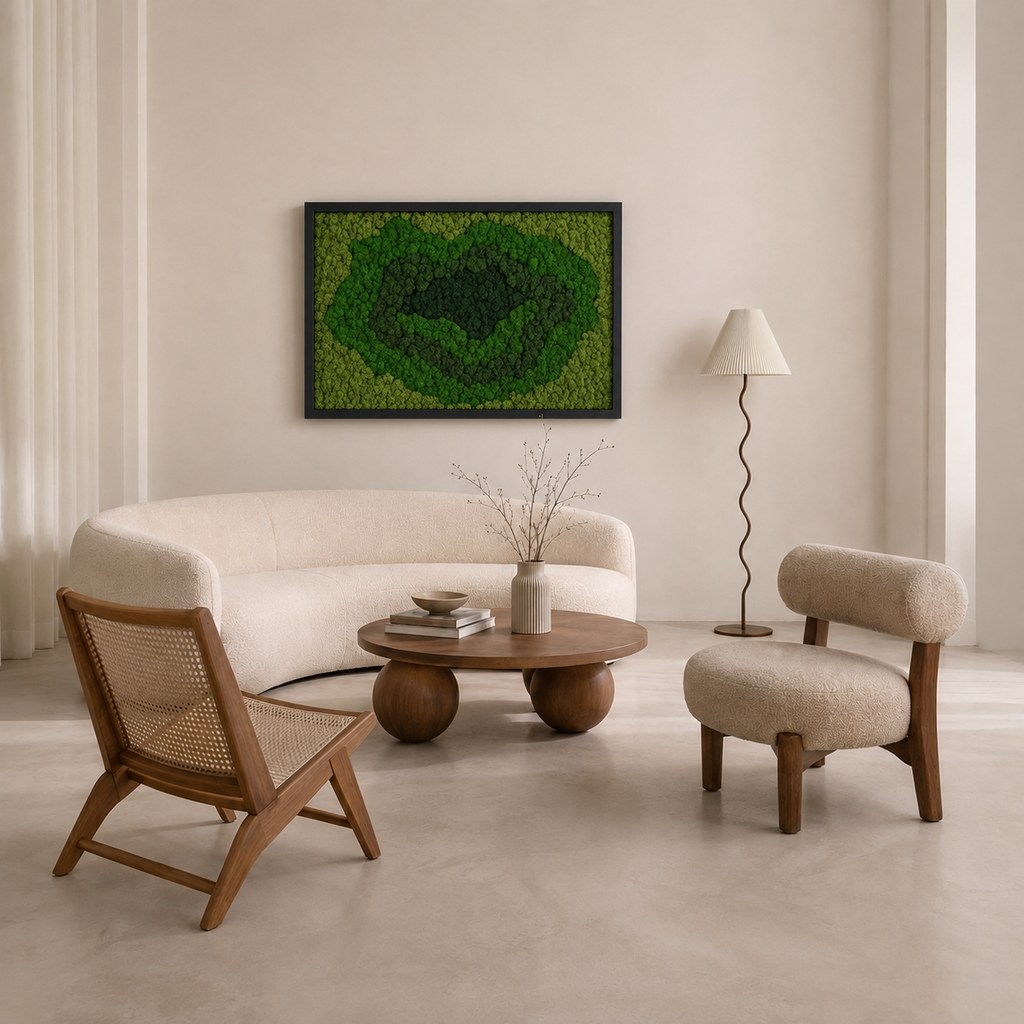
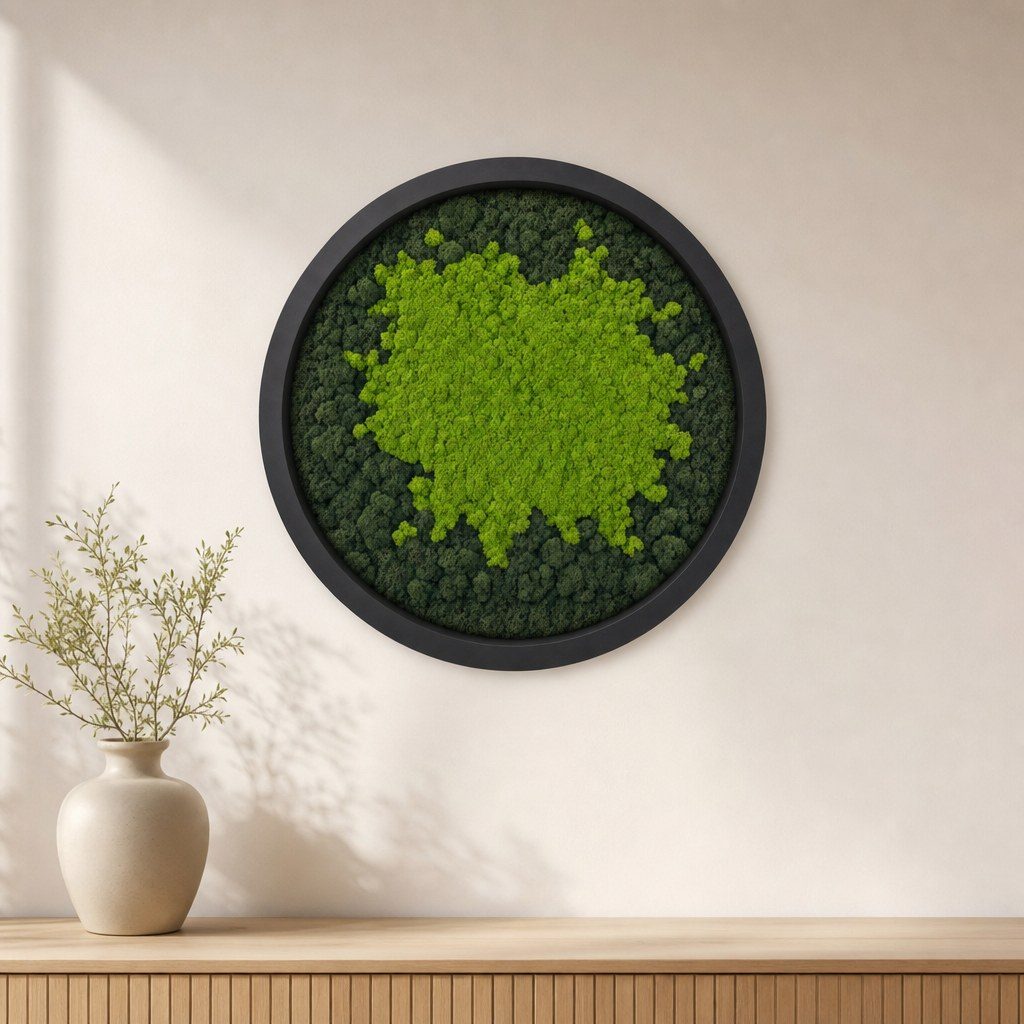
Every Waldart piece is made from preserved Alpine moss — real moss, kept soft and green, set tuft by tuft by hand in our workshop near Graz.
See the collectionFigures on this page follow the German Wikipedia article “Moose” and the sources cited there. Illustrations are our own.